
Published in the 2023 issue of RawFiles magazine.
Mid-summer of 2022, I found myself in a motel in Lone Pine, California with three good friends— exhausted after a long day of driving and a troubled night of camping in the Owens Valley desert the night before. It was only mid-afternoon, and in the spirit of trying to cram as much as we were able into every day of our trip, we were struggling to muster up the willpower to part with our comfortable air-conditioned room and venture back out into the sweltering heat for another adventure. Three of us managed to get back out on the road, one (very wisely) opted to bask in the air conditioning.
Our destination was Reward: a long-abandoned mining town about half an hour outside of Lone Pine. According to my friend Kyra’s research, the ghost town is regionally famous as a spot for people to drive their jeeps into an open mineshaft on the side of a mountain. We imagined how exciting it would be to go into the mineshaft and explore, but we were woefully limited by our Honda civic’s rough-terrain (in)abilities. The mineshaft, we figured, was to remain a fun piece of trivia about the place and nothing more.
There really wasn’t much left of Reward. We could see the remains of a few ruined buildings and an abandoned mill structure a short ways up the mountain that we pulled up to, and thousands of rusted tin cans littering the ground. A group of men were camped nearby with their trucks on a large patch of sand. We ignored them, they ignored us. Off we tromped up the slope in the beating sun.
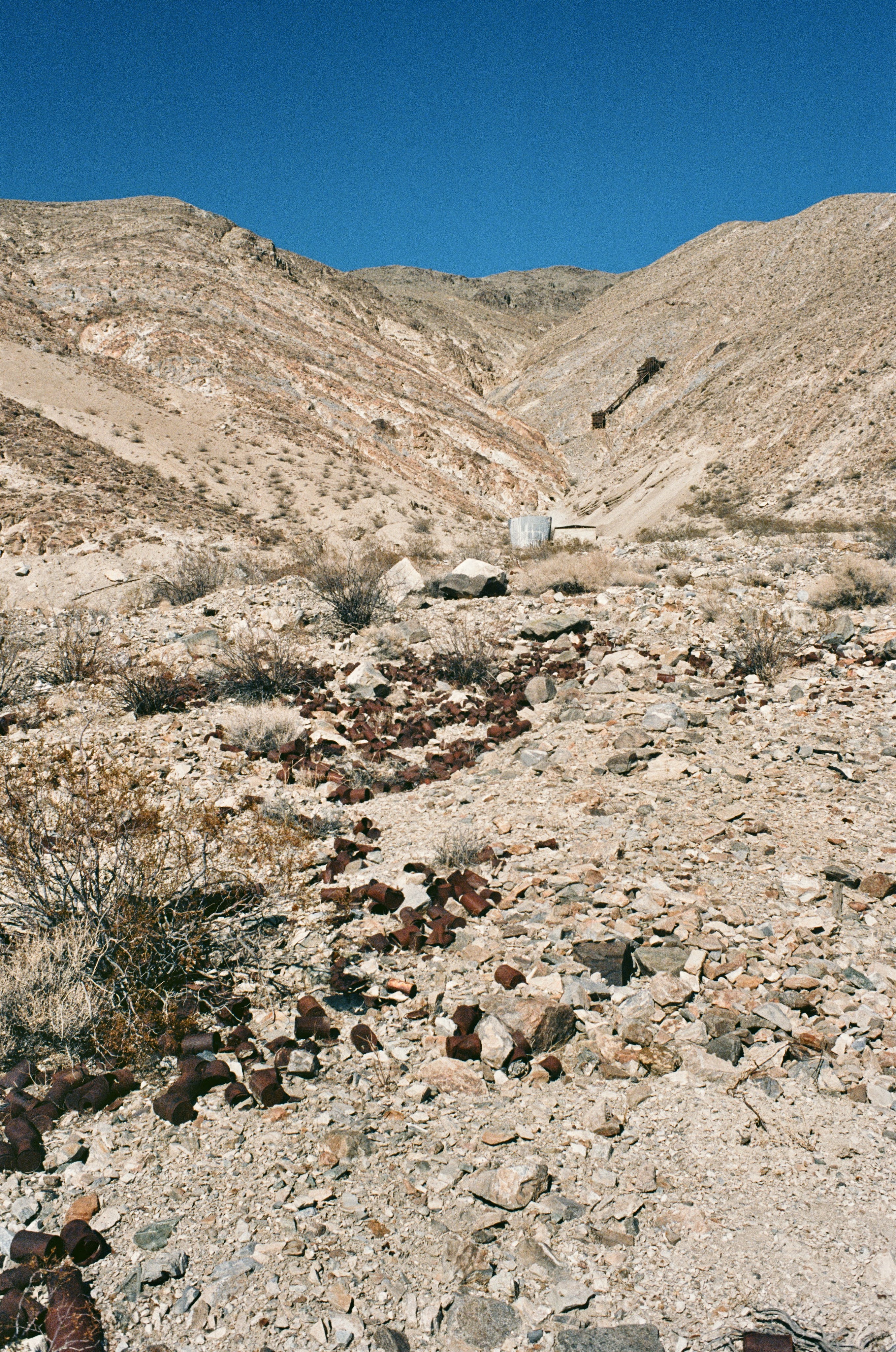

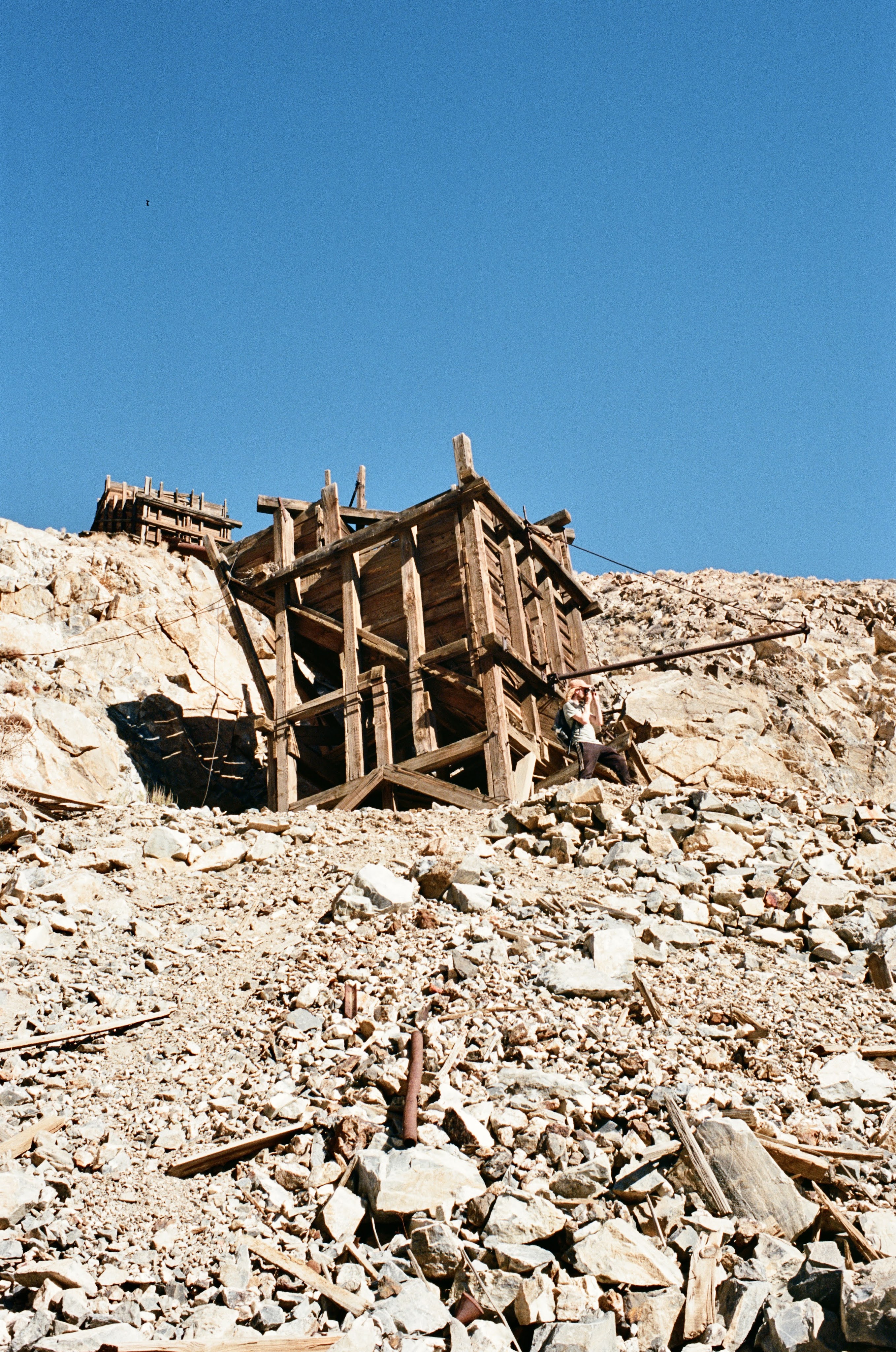
Photographs by Ben Clark and Griffen Dempsey.
We quickly came upon the battered hull of an ancient car, rusting and riddled with bullet holes. We had only been walking for about fifteen or twenty minutes, but already the desert air was sucking my throat dry every few steps, and making me sweat profusely. Fortunately, I had plenty of water… I thought.
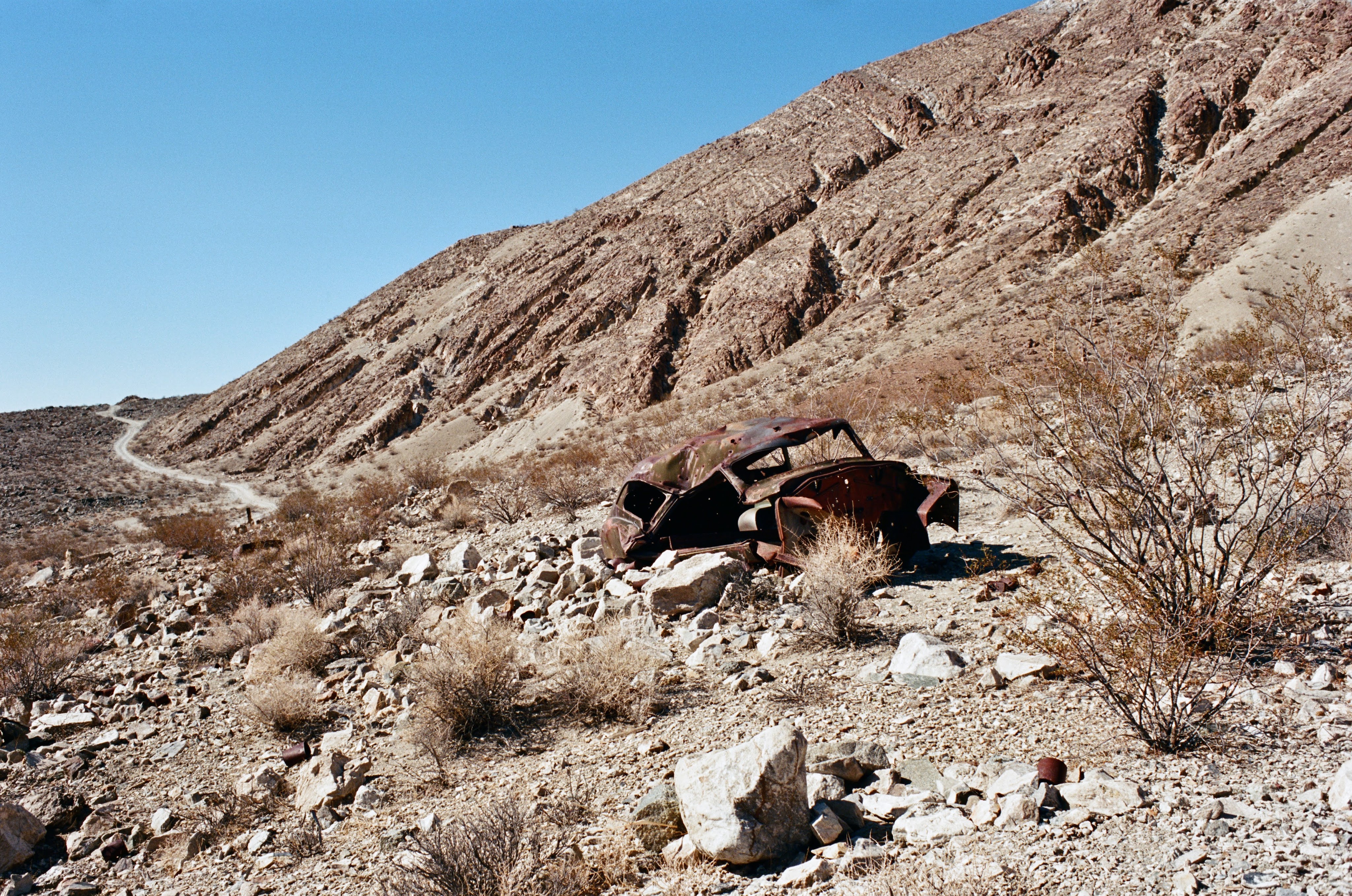
Photograph by Ben Clark.
Our goal was to reach the wooden mill structure further up the mountain, which at first glance didn’t seem all that far away, but as our journey wore on, I found the heat rapidly taking its toll, and the mill seemed to draw no closer. My water bottle quickly got low, my breath quickly became short, and I tried to strategize my route up to dash between whatever nooks of shade I could find. Two-thirds of the way up, I wasn’t sure if I would be able to make it all the way. It might have been smart to turn back, but with some dumb determination and gentle encouragement from Kyra and Griffen, we got to the mill eventually.
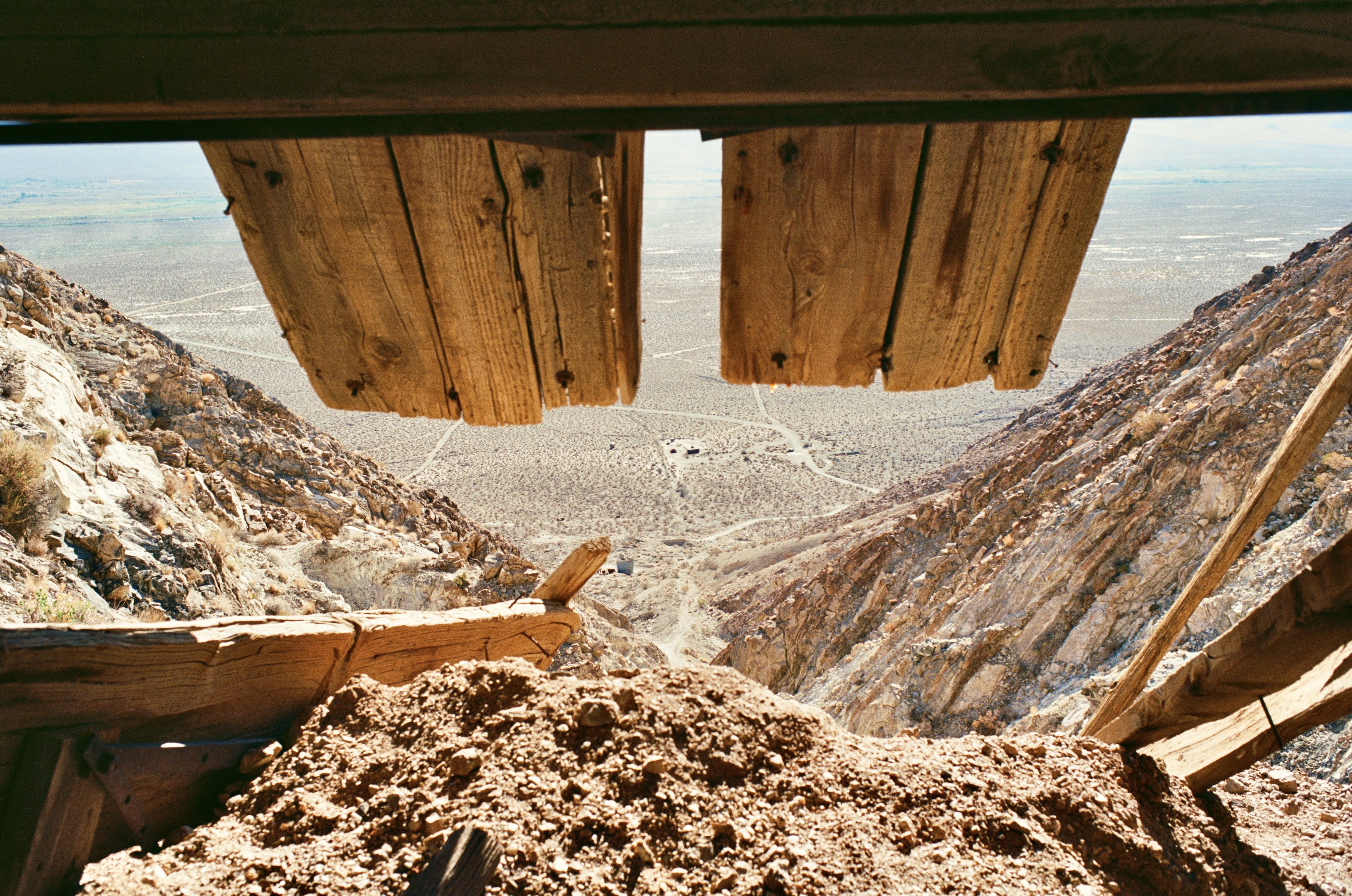
Photograph by Ben Clark.
It took us perhaps forty-five minutes to climb up to the mill, and no more than fifteen to get back down. The prospect of air conditioning and a shower was our singular focus as we walked back to the car, and we were caught off guard when one of the men at the campsite approached us.
He asked us what we were doing there. We told him.
“Did you go into the mineshaft?” He asked. “No,” we explained. Impending heat exhaustion and a Honda civic all but denied that possibility.
He paused for a moment, grinned, and then asked: “Would you like to?”
I’ll never forget the maniacal gleam of excitement in Kyra and Griffen’s eyes as they turned to look at me as if to ask “Can we? Please?”
In my mind, there was only one valid response: “How can I possibly say no to that?!”
The man introduced himself as Shae, and brought us over to his campsite to meet his quirky group of friends. My friends and I hopped into Shae’s truck, and two of his friends sat in the truck bed. Before we set out, Shae asked if we minded if he brought his rifle along.
“Weird shit goes on in that mine,” he explained. “You never know what you’re going to find in there.”
Until that point, I’d gone pretty much my entire life hardly even having glanced at a firearm. It occurred to me that, when facing the prospect of entering an abandoned mineshaft with a bunch of random, gun-toting guys in the desert whom I’d only just met, perhaps a touch of squeamishness about the immediate future was justifiable. Yet, as Shae told us his history as a firearm safety instructor, Kyra sharply commanded me: “Ben, just trust him.” And so I did, and off we went up a rocky, nearly forty-five degree slope, with Shae’s friends gleefully hanging on for dear life in the bed of the truck.
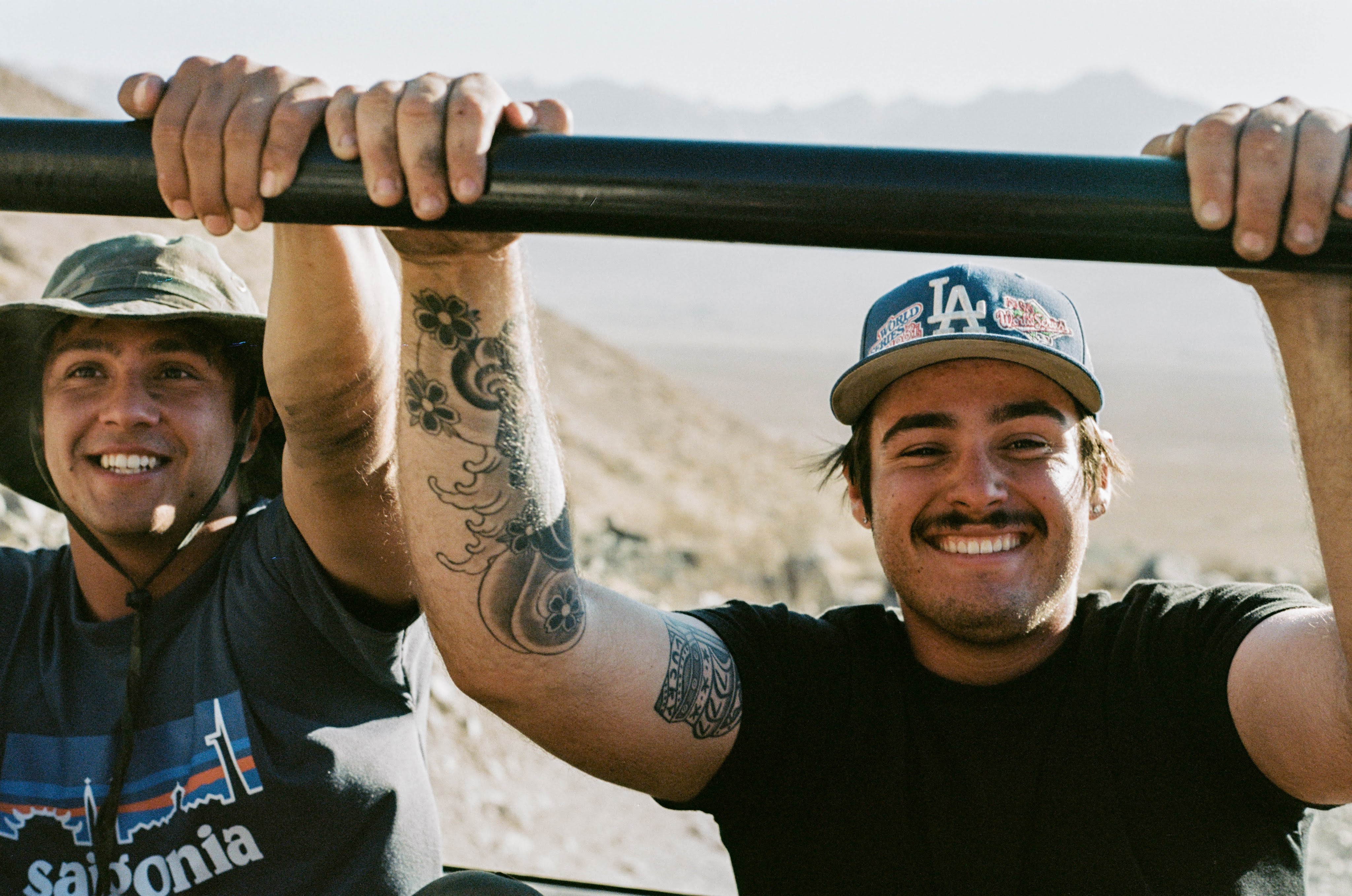
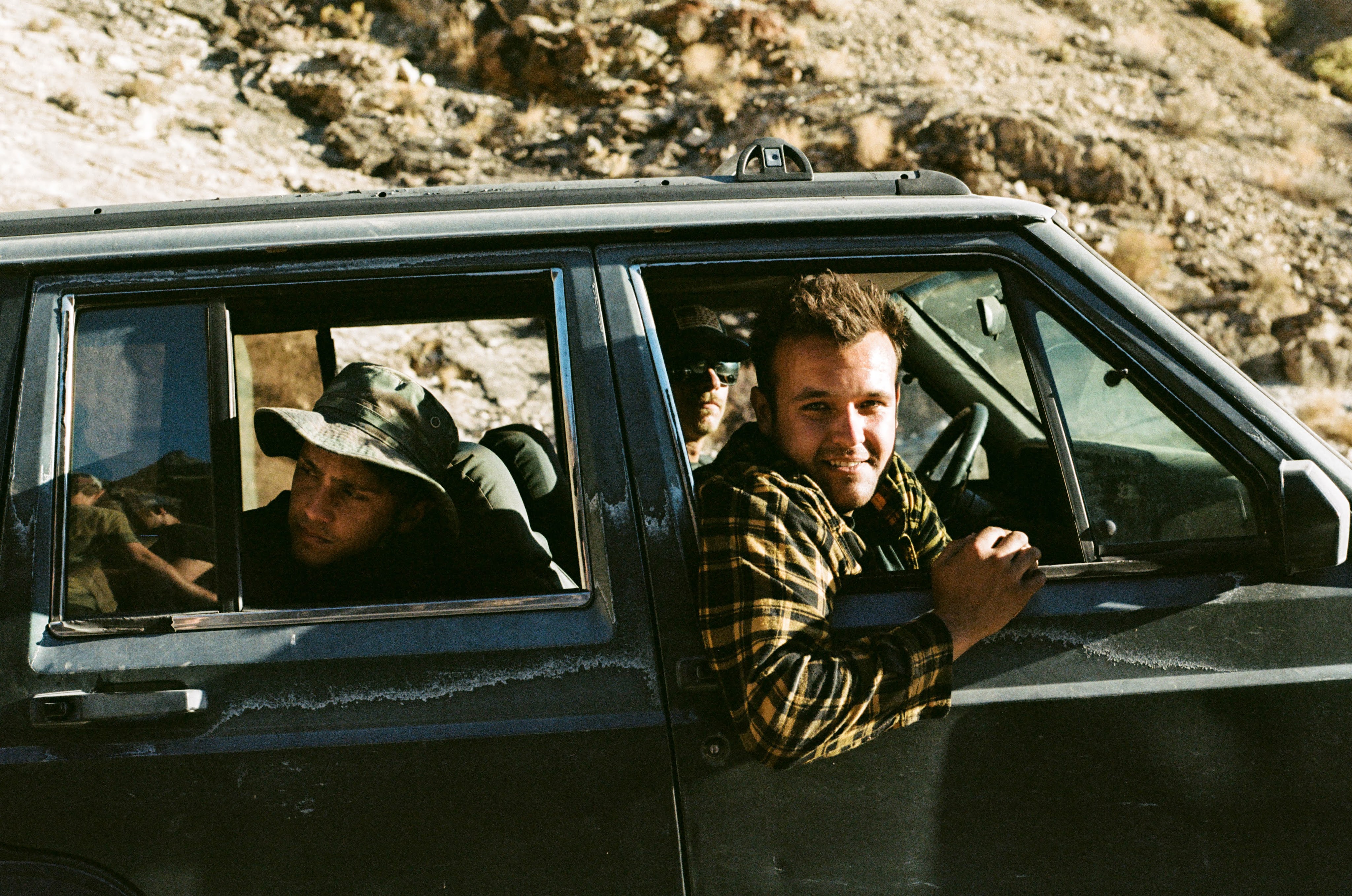
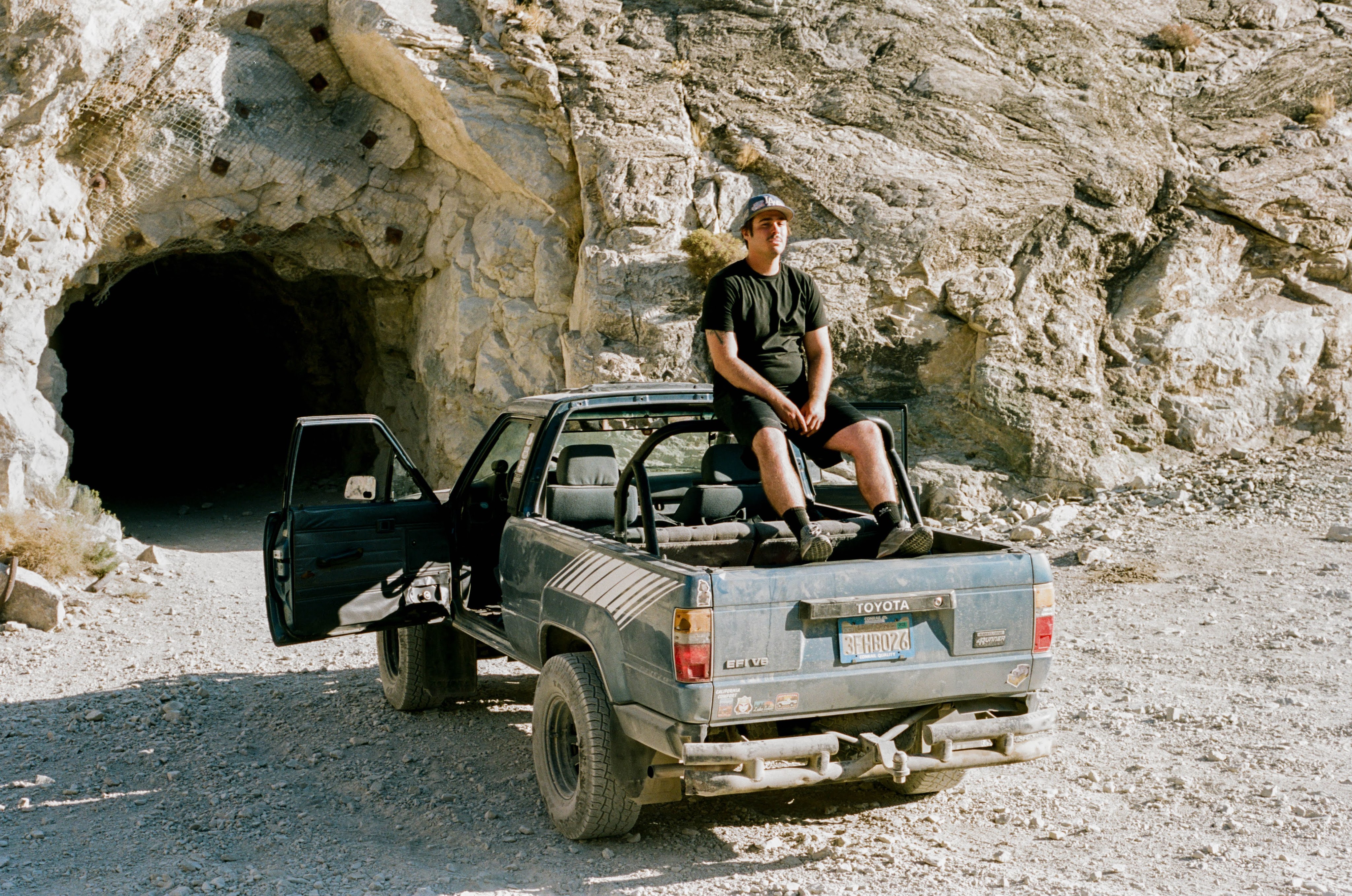
Shae’s Friends. Photographs by Griffen Dempsey.
As we lurched up the hill, Shae turned to me and asked “Ben, have you ever handled a firearm before?” “No,” I told him. “Griffen, have you ever handled a firearm?” “Kyra?” We all replied in the negative. “Do you guys wanna shoot a gun after we’re done in the mine?”
Again, how could we say no to that?
The mineshaft went deeper than any of us expected— Shae estimated it ran about half a mile into the mountain. Since the truck was no longer straining over large rocks, I was able to notice the soft classical music wafting out of the truck’s stereo. “Are we… listening to Beethoven?” I asked. “Nah, I’ve just queued up a bunch of adventure movie soundtracks.” Shae replied.
We reached a chamber at the end of the tunnel that was far in excess of the size of a house. Graffiti covered the walls, beer cans dangled from the ceiling, and the remnants of all of yesterday’s parties littered the corners of the place. Dust clouded the air, and with every breath I thought: I’m probably losing a few days of my lifespan breathing all this crap in, but who cares.
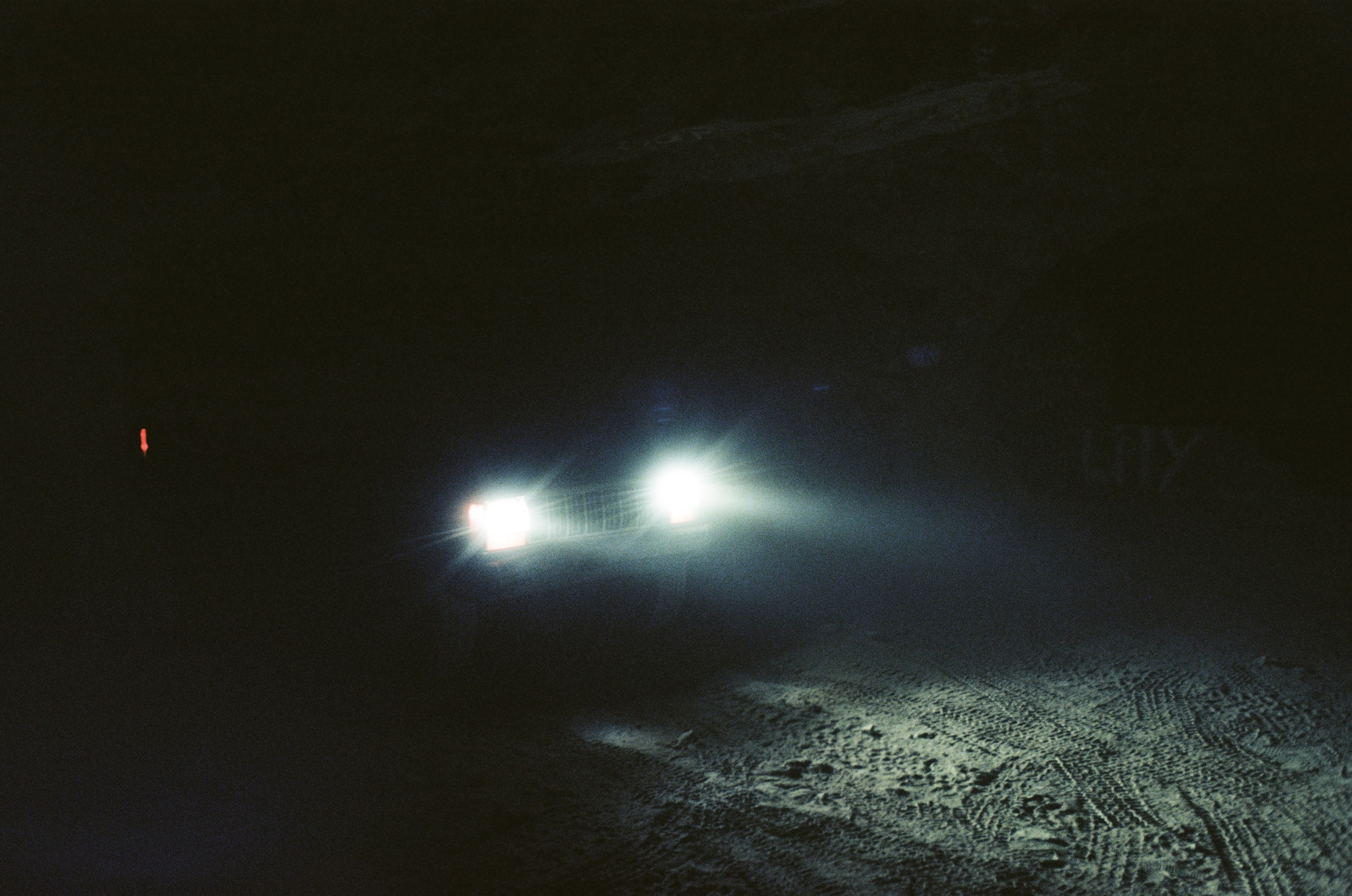
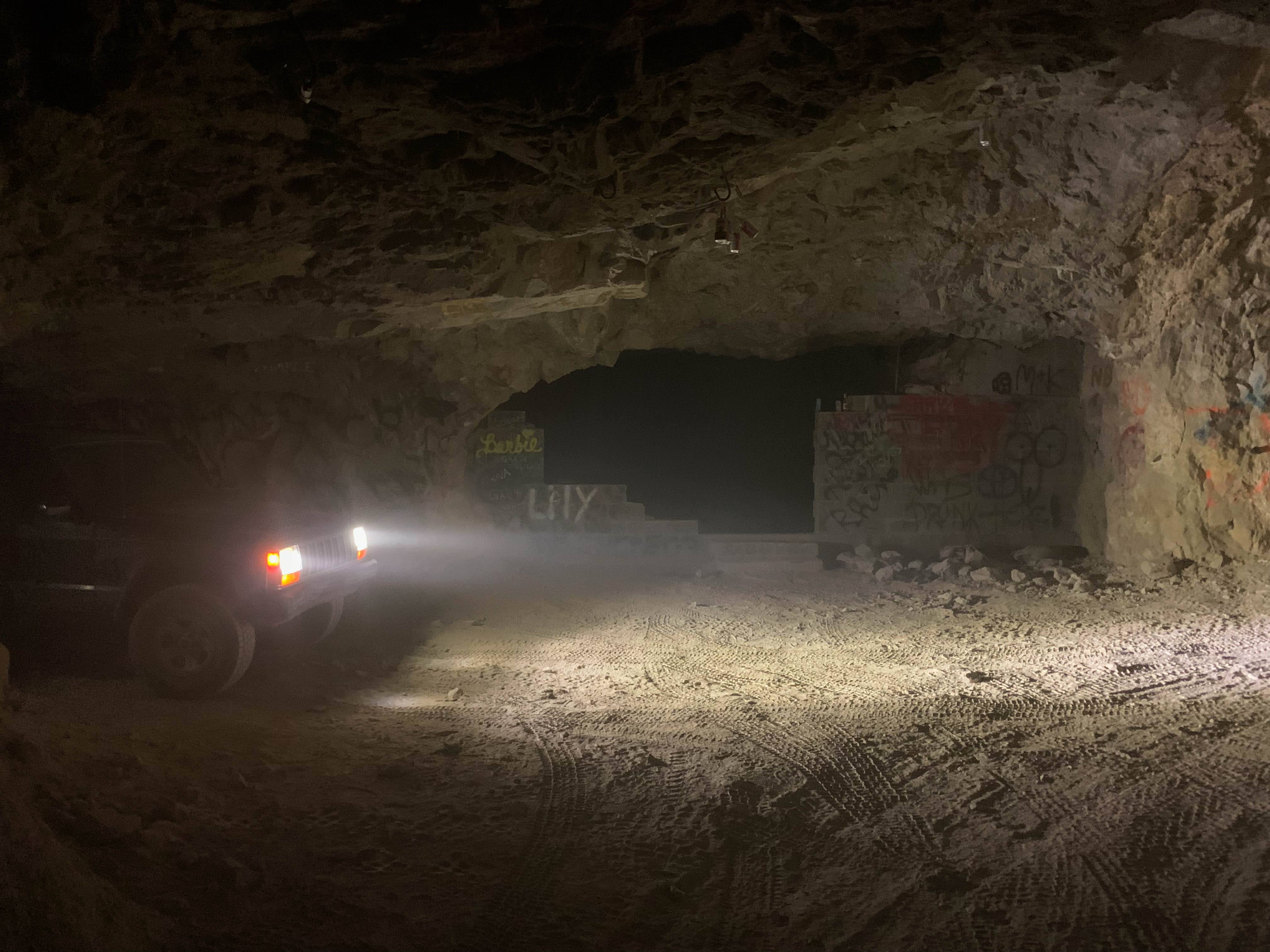
Photographs by Ben Clark and Kyra Dempsey.
Shae led us down side tunnel after side tunnel in what turned out to be something of a meandering labyrinth far beneath the mountain. We passed a ladder rising up through the tunnel ceiling into darkness. I asked where the ladder might go, and Shae speculated that it emerged near the wooden mill structure we’d just been exploring.
Down another side tunnel, Shae called everyone’s attention to a rusting metal rod sticking out of the wall. “This rod,” he stated with a booming, safety-officer inflection, “is what the miners used to drill dynamite into the walls. It might still have explosives at the end of it, so don’t touch it, or you might kill everybody.” We tread as wide a circle around the rod as we could.
The dust and darkness didn’t lend themselves well to photography, to my dismay. Most of my documentation of the mineshaft itself are memories— particularly of the moments we all shut our flashlights off and stood quietly in an absolute void. Darkness underground, as one might expect, has a distinctly claustrophobic quality. You can feel the slight difference in air pressure, and the gentle wafting of dust as it lingers around you. The air feels thick, and the silence— brought about by hundreds of feet of solid rock in every direction— feels heavy. The sensation is as exciting as it is disquieting.
If we didn’t have a gun to fire, dinner to eat, and a friend waiting for us in Lone Pine, who knows how long we could have spent poking around in those tunnels. We returned to Shae’s truck and rumbled out of the mine, with the Raiders March from Indiana Jones accompanying our re-emergence into the blinding evening sun.
Shae gave my friends and I two rounds each once we returned to his campsite. He walked us through the basics of firearm safety, and had us take aim at the rusted car on the hillside, over a hundred feet away. I felt uneasy holding the rifle at first— grimly aware that it was an instrument of death that I had no real business wielding. The adage of “do not point this at anything you do not intend to destroy” floated through my head as Shae loaded the clip into the rifle with a pronounced click, and turned the safety off. “Alright, whenever you’re ready, just squeeze and let the rifle do the rest,” he said.
CRACK. The explosion rattled my chest and echoed off the mountainside for a few moments. I fired again, and a plume of dust erupted from the car. “Oh! You hit it!” Kyra exclaimed. Shae quickly overshadowed my marksmanship, however, as he switched his gun to fully-automatic and emptied an entire clip on the car.

Shae, himself. Photograph by Griffen Dempsey.
After I gathered my bullet casings to take as a memento of our encounter, we returned to the campsite for a final group picture, and many heartfelt handshakes, thanks and goodbyes.
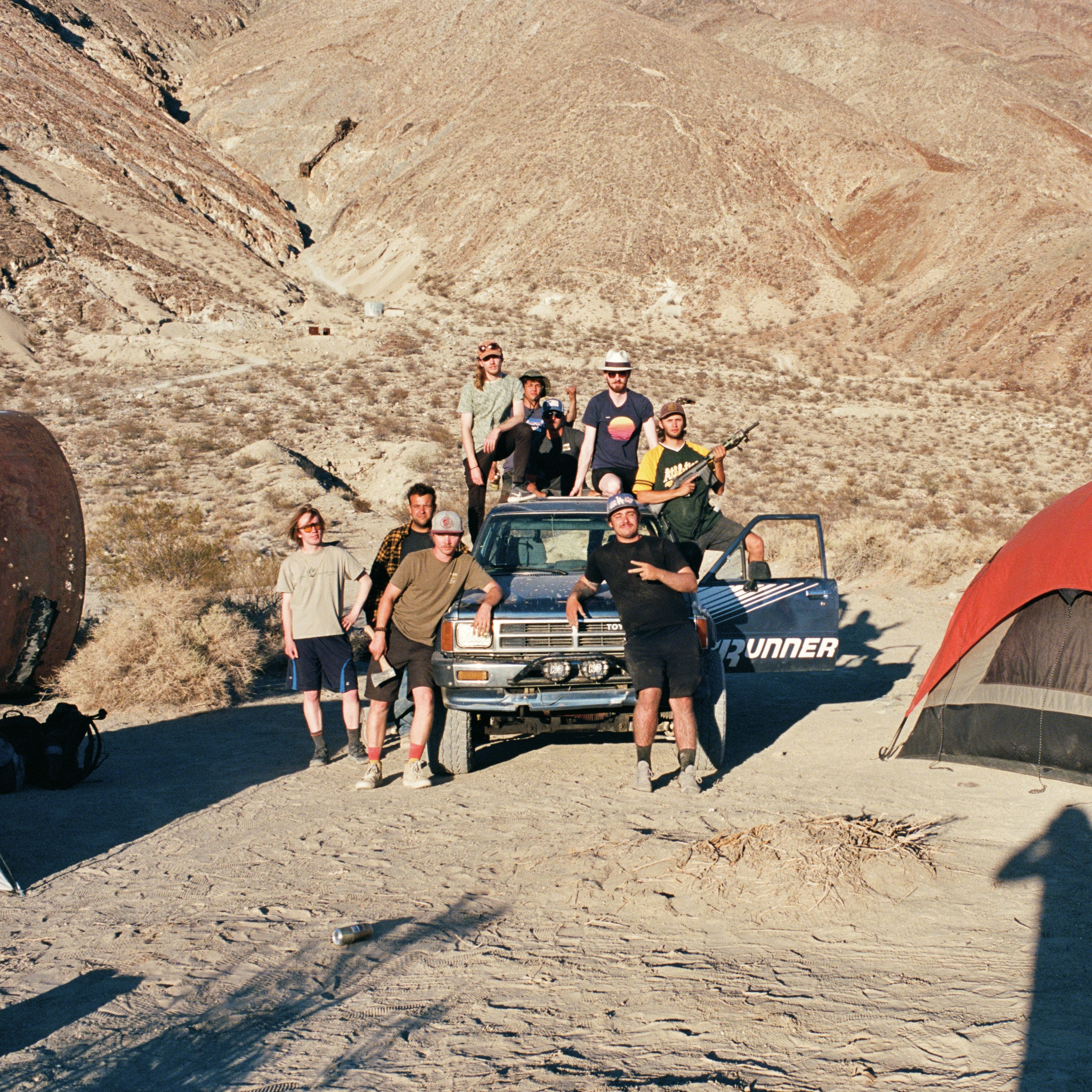
My friends and I returned to our car and drove off into the sunset, in ecstatic disbelief that the events of the day had actually happened.
The bullet casings now sit on a shelf next to a collection of other prized oddities I’ve accumulated from memorable experiences with friends and strangers over the years, and there, I expect, they’ll remain for the rest of my life. They are tokens of a rare perfect experience that I deeply cherish, and take continuous delight in reminiscing over with the friends I shared the moment with, and the friends I didn’t.
Perhaps there are some broad metaphors to be made about luck or fate or human kindness by this encounter, or some advice to be given about taking chances. There are many ways in which this adventure could have never happened, or, all things considered, gone horribly wrong. All I can say in retrospect to you, the reader, if you care to hear it, is to allow for spontaneity and adventure in your life. Talk to strangers. If faced with a dilemma, choose whichever option might make for the best story in the end.
Extraordinary things can happen.
 Ben's Lens